At. St. Jude, our strong academic program places the development of faith at its very core, recognizing that authentic education forms not only the mind, but the whole person. Rooted in the teachings of the Catholic Church, our program integrates faith naturally throughout a rigorous curriculum, encouraging students to pursue academic excellence while growing in their love of God, neighbor, and truth. Through prayer, the sacraments, service, moral formation, and the witness of dedicated teachers, students are challenged to develop intellectual curiosity, critical thinking, virtue, and a deep sense of responsibility to others. In this environment, academic achievement is understood not as an end in itself, but as part of the formation of young people who are confident in their faith, compassionate toward others, and prepared to use their God-given gifts in service to the Church, their communities, and the world.
PRESCHOOL
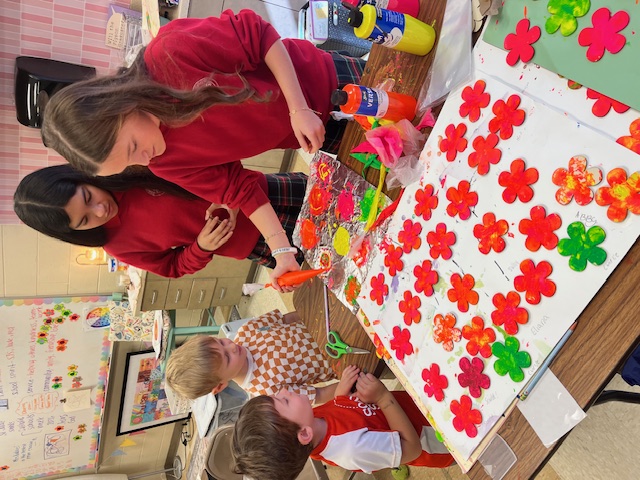
Our program is designed to meet the developmental needs of three and four-year-olds. We provide experiences that enrich and enhance your child’s cognitive, language, social, emotional and physical development. Within the Preschool’s daily schedule, children have the opportunity to create, explore their environment, interact with classmates and teachers, and learn concepts through first-hand experiences. Children develop a positive self-concept and confidence through a balance of self and teacher-directed activities. We want each child to reach his or her fullest potential in a relaxed, supportive, and nurturing environment.
ELEMENTARY SCHOOL
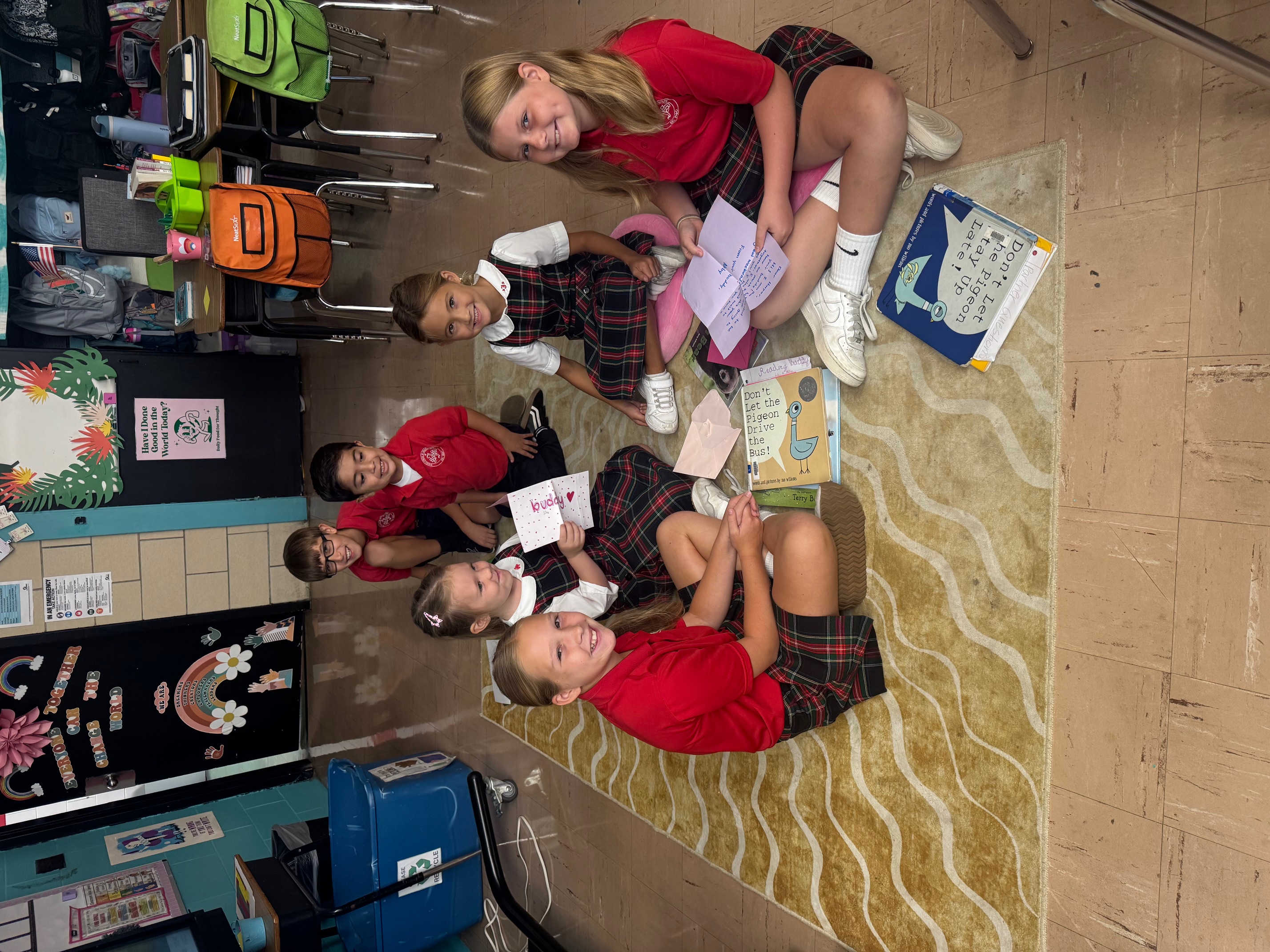
Our elementary school program includes grades Kindergarten through 5th, with 4th and 5th grade considered intermediary grades - preparing our students for middle school. We offer the following classes to these students:
Math
Language Arts
Science
Religion
Social Studies
Library
Technology/STREAM
Art
Music
Spanish
Our average class size is 18, with a 1:15 Student/Teacher ratio. We employ two full-time Resource teachers and two part-time Interventionists. Our students are challenged to meet their highest goals and full potential. Our elementary school environment encourages our students to embrace the ability to learn, pray and play!
MIDDLE SCHOOL
The St. Jude Middle School program follows a unique schedule with specific teachers designated for:
Math
Language Arts
Science
Religion
Social Studies
Spanish
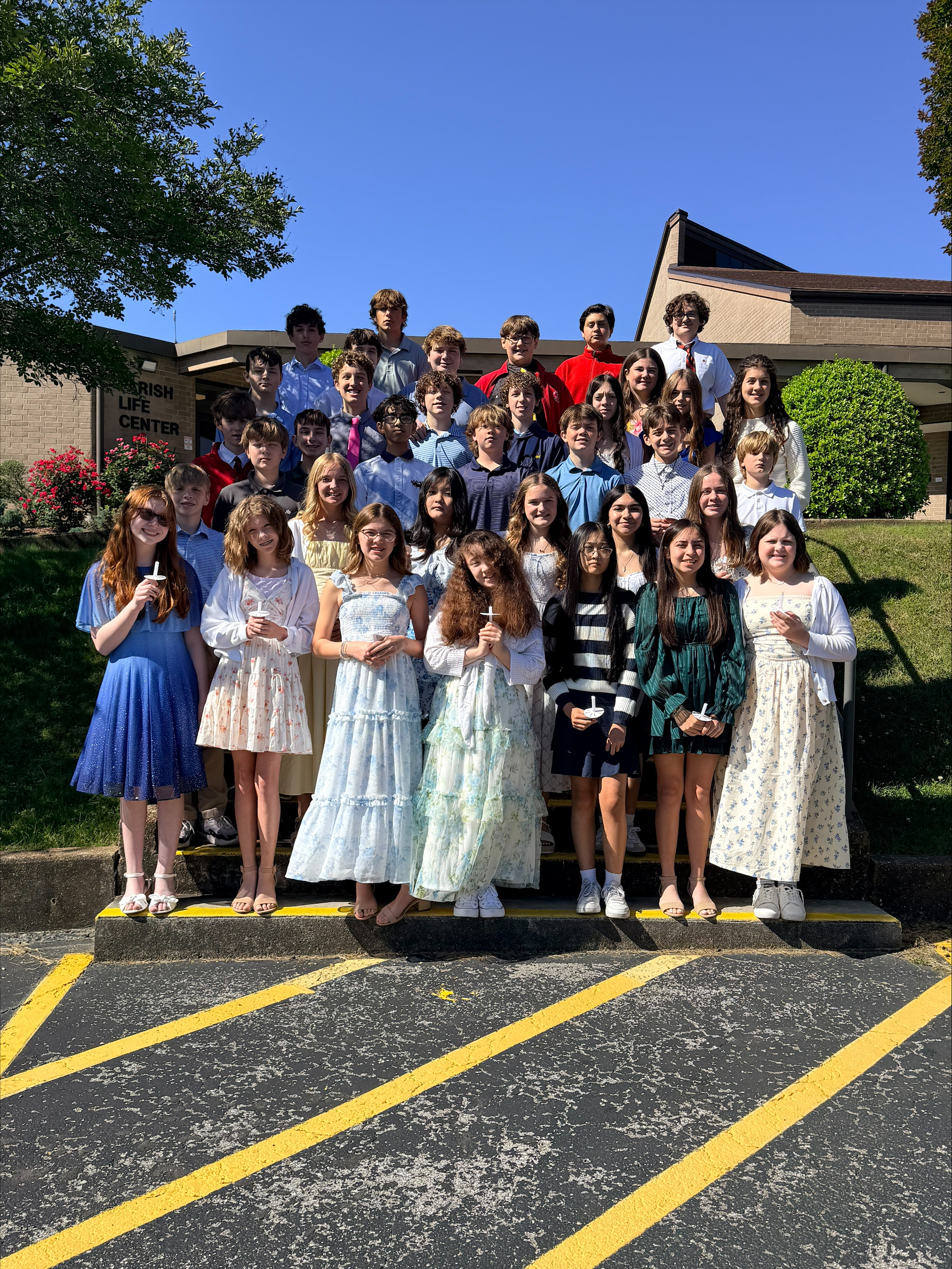
In addition, our middle school students take PE, Art, Music, Technology/STREAM, and Library. They are offered multiple opportunities to investigate and utilize their art and dramatic abilities. Opportunities include Living Museums, Plays, Band, Living Stations of the Cross, Mass Choirs and Bells Choir. One much loved tradition in 8th grade is the 1st/8th grade partner program, creating relationships that often last for many years. In middle school, our average class size is 20, with a 1:17 Student/Teacher ratio. We employ one upper school resource teacher.
IOWA Tests of Basic Skills
Each year, students at St. Jude School test and evaluate their skills and achievement in core subjects.
St. Jude School Cogat and IOWA Student Performance 2025-2026
Technology Use As Directed by the Diocese of Knoxville Office of Catholic Schools
A great deal of discussion has recently taken place around the use of technology in education, especially as there is evidence of an abundance of screen time having a negative effect on students and the capacity to think creatively, critically, and comprehensively.
Tennessee House bill 2393, expected to take effect, has again brought the subject to the forefront of news. Although this requirement for reporting will only apply to LEAs and public charters, it is an opportunity for us to reflect on what we can do in our schools.
As with anything, moderation is key. Looking toward the coming school year, I would like us to intentionally restore greater balance between technology-based instruction and traditional instructional practices. While digital resources remain an important component of teaching and learning, students benefit significantly from regularly writing by hand, taking notes with paper and pencil, and engaging in thoughtful written work.
When students write by hand, they are more likely to process information deeply, organize their thoughts, improve memory retention, and develop stronger thinking skills. Proper note-taking encourages active listening, reflection, and comprehension in ways that passive interaction with digital devices often cannot replicate.
Technology has brought experiences into classrooms that were never possible before. In so many ways, it has opened up the world for our students. Our teachers and faculty have been instrumental in embracing technology as a valuable instructional tool, allowing our schools to expand opportunities for learning and engagement.
We do not suggest the abandonment of digital instruction. In fact, we encourage the examination of various digital platforms to assist teachers with instruction. We promote the consideration of ways to ensure that technology serves instruction instead of driving it. The goal is to use each instructional tool intentionally, selecting the method that best promotes meaningful learning and student growth.
We encourage the use of technology strategically when it enhances learning while avoiding unnecessary dependence on electronic devices for routine student tasks. Model balanced instructional practices that cultivate both digital literacy and foundational academic skills.
As Catholic educators, we recognize that education is not merely the transfer of information, but rather the formation of the whole person. Developing disciplined habits of thinking, writing, and reflection helps our students become lifelong learners and faithful disciples of Christ. Small, intentional changes made consistently across our schools will have a lasting impact on student well-being and intellectual development.